DEVELOPING A BATTERY PARK IN LITHUANIA
Your battery.
Our infrastructure.
You purchase a battery. We provide the site, grid connection infrastructure and organisation of the park. An aggregator manages its participation in electricity markets.
We invite you to express your interest in participating in the park. We are not currently accepting payments or entering into reservation agreements. We will discuss the terms of participation individually.
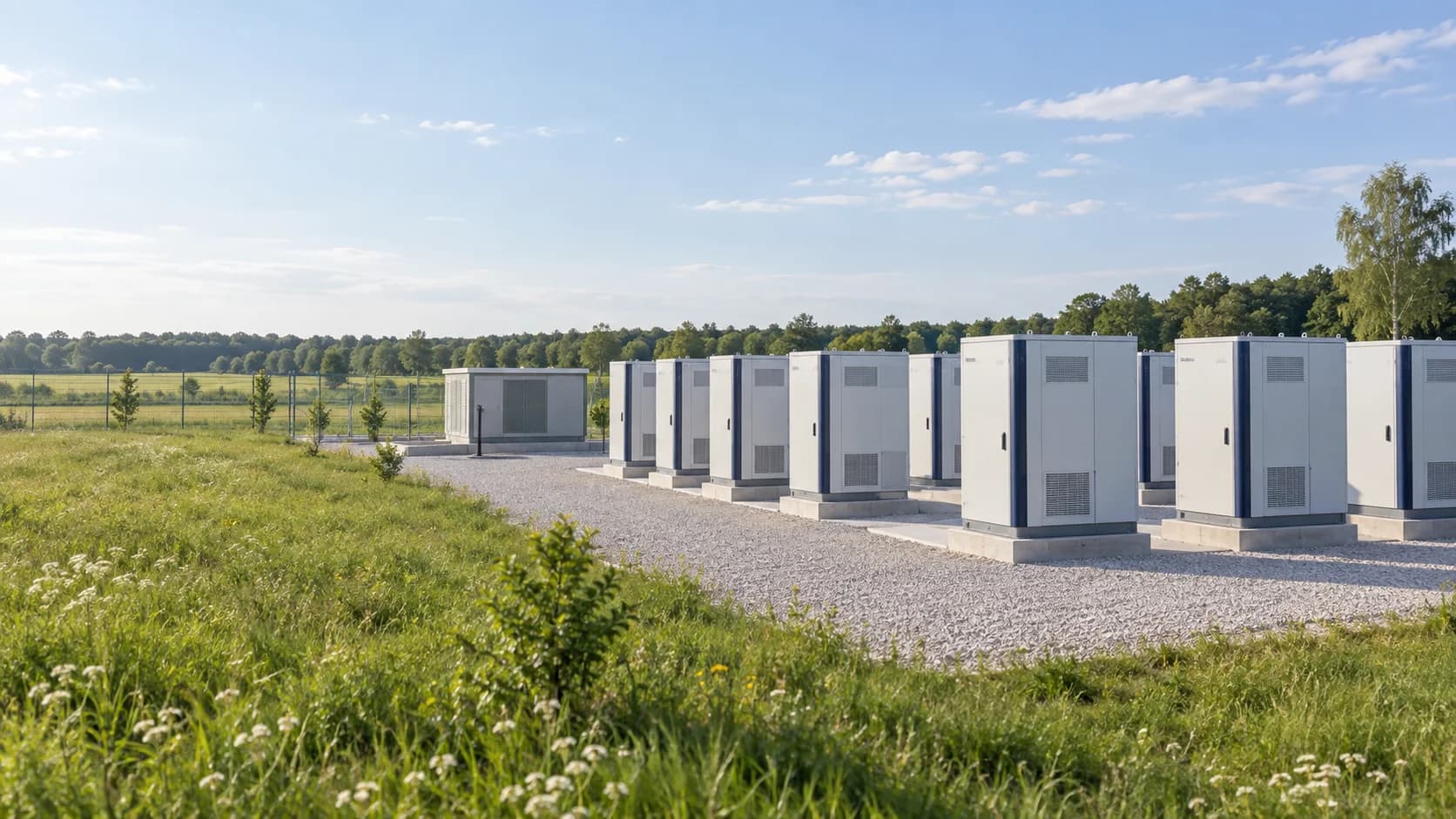
What generates revenue for a battery?
A battery can earn revenue from several sources. Balancing services cover availability and activated response, while electricity trading makes use of price differences.
Availability
When reserve capacity is procured, payment is made for a commitment to be ready to change power output or consumption at the agreed time.
Activated response
When a balancing service is activated, the balancing energy delivered is settled under the rules for that product.
Electricity trading
The aggregator can buy and sell electricity at different times, using price differences and managing the battery’s state of charge.
The aggregator coordinates these activities according to market conditions, battery capabilities and commitments. Not all revenue streams are automatically available at the same time.
More about battery revenue streams (Lithuanian)How it works
What do battery power and capacity mean? (Lithuanian)
- 01
You purchase a battery
One participation unit is a 125 kW / 250 kWh battery that you own.
- 02
We install it in our park
We arrange the site, shared grid connection infrastructure and the organisation of park operations.
- 03
The aggregator manages operations
An aggregator will manage the batteries’ participation in electricity markets. We will pay you the revenue earned, after agreed fees and costs. Revenue will depend on market conditions and battery operation.
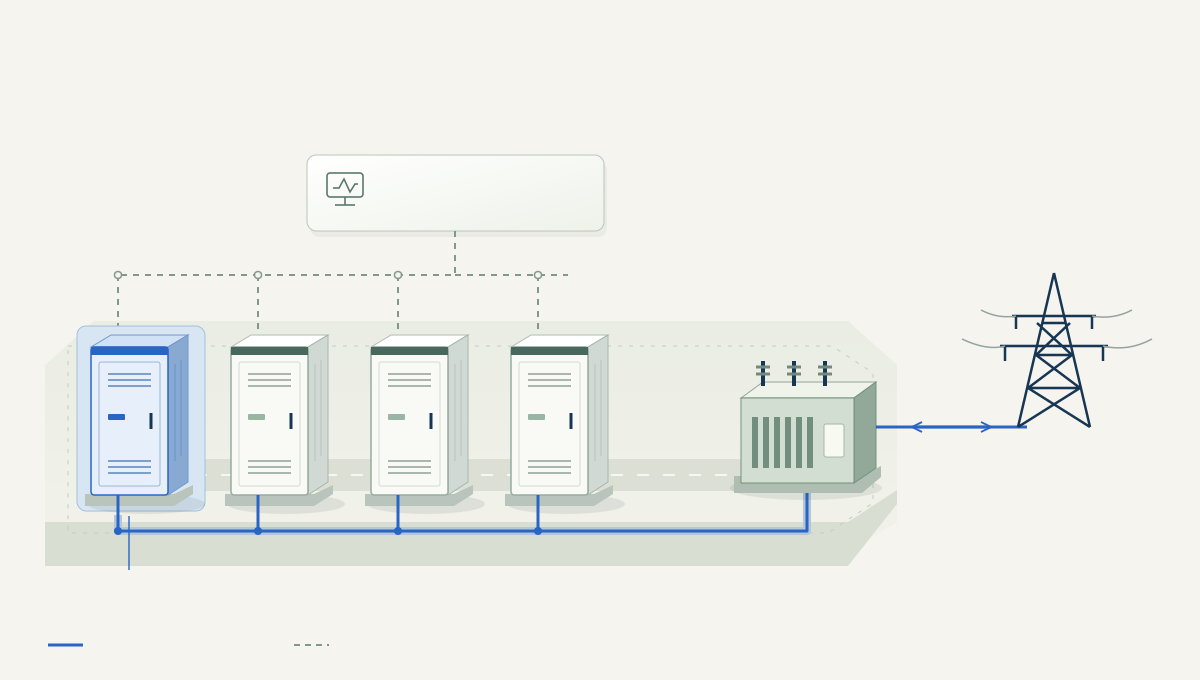
Your battery. Our infrastructure.
The aggregator manages operations; energy flows through the park’s shared grid connection.
Shared park infrastructure
Transformer
Electricity grid
Electrical connectionControl signalThe overview shows the full diagram. Enlarge it to read the smaller labels.
Your battery. Its revenue potential.
125 kW / 250 kWh
50,000 € including VAT
Purchase price of one battery
Annual revenue scenario
36,493 € / year
3,041 € / month
Monthly average in this scenario
Annual revenue scenario based on the Clean Horizon battery revenue index for Lithuania, averaged over January–July 2026, with aggregation and park hosting services taken into account. Actual revenue will depend on market conditions.
I’m interestedTerms are being finalised. The final equipment configuration, operating fees and financing options are still being discussed.
Battery park layout
What to know before taking part
We are developing a park where your own battery will operate with shared infrastructure and professional management. Here are answers to the key questions about participation.
Who will own the battery?
The battery you purchase will belong to you. We will install it in our park and arrange the site, connection infrastructure and organisation of operations. Ownership and the terms for using the infrastructure will be set out in agreements.
Will I have to trade electricity myself?
No. An aggregator will manage the park’s batteries in electricity markets. Its role is to coordinate balancing services and electricity trading according to market conditions, battery capabilities and commitments.
Are batteries also needed in mature European markets?
Yes. Batteries participate in electricity markets in Germany, France, Finland and other European countries. They help respond quickly to system needs and shift energy consumption or supply to another time. This is part of Europe’s wider energy transition.
What if the balancing market becomes saturated with batteries and revenue falls?
Our aim is to make use of current market opportunities and work towards a payback period of 2–3 years. This is a target, not a guaranteed timeframe.
But the battery’s value extends beyond the balancing market. It remains your property: it can continue earning revenue in the park or serve your home or business, storing solar energy and supplying it when needed.
For example, 250 kWh is roughly one week’s electricity use for a home consuming 1,000 kWh a month. This offers a way to use more of the electricity you generate yourself and buy less from the grid.
You are acquiring a long-term asset whose use you can adapt to your needs and a changing market.
What will my earnings depend on?
On the battery’s market revenue and operating costs. In our model, the aggregator’s fee, park infrastructure fee and operating costs are deducted from revenue. We will provide the full fee structure before you decide to purchase a battery.
When assessing revenue and payback, we will use market data for a specific period and clear assumptions. Calculations will be presented as indicative scenarios: actual results may be higher or lower.
Is this similar to owning a share of a remote solar park?
The ownership principle is similar: you own your equipment in a shared park, while the operator manages infrastructure and maintenance. A battery earns revenue through electricity markets and balancing services, so its revenue model and payback differ from those of a solar installation.
Does registering commit me to investing?
No. Registering your interest simply tells us that you would like to learn more about participating in the park. It is free and does not commit you to a purchase. We will explain the project terms and participation process before you decide. We are not currently accepting payments or entering into reservation agreements.
Interested in taking part?
Leave your contact details — we will call, answer your questions and arrange a meeting. Registering is free and does not commit you to investing.
One battery: 125 kW / 250 kWh. Indicative price: around €50,000 including VAT. Transport, connection and activation costs are already included.
What happens next?
- 1. Express your interest
Leave your contact details and tell us what kind of participation you are considering.
- 2. We get in touch
We call, answer your initial questions and arrange a meeting.
- 3. We meet
We discuss the project, your needs and the terms of participation.
- 4. Once agreed, we prepare a contract
You decide whether to participate after reviewing the proposal and contract terms.
Registering is free and non-binding.